
Table of Contents
Introduction
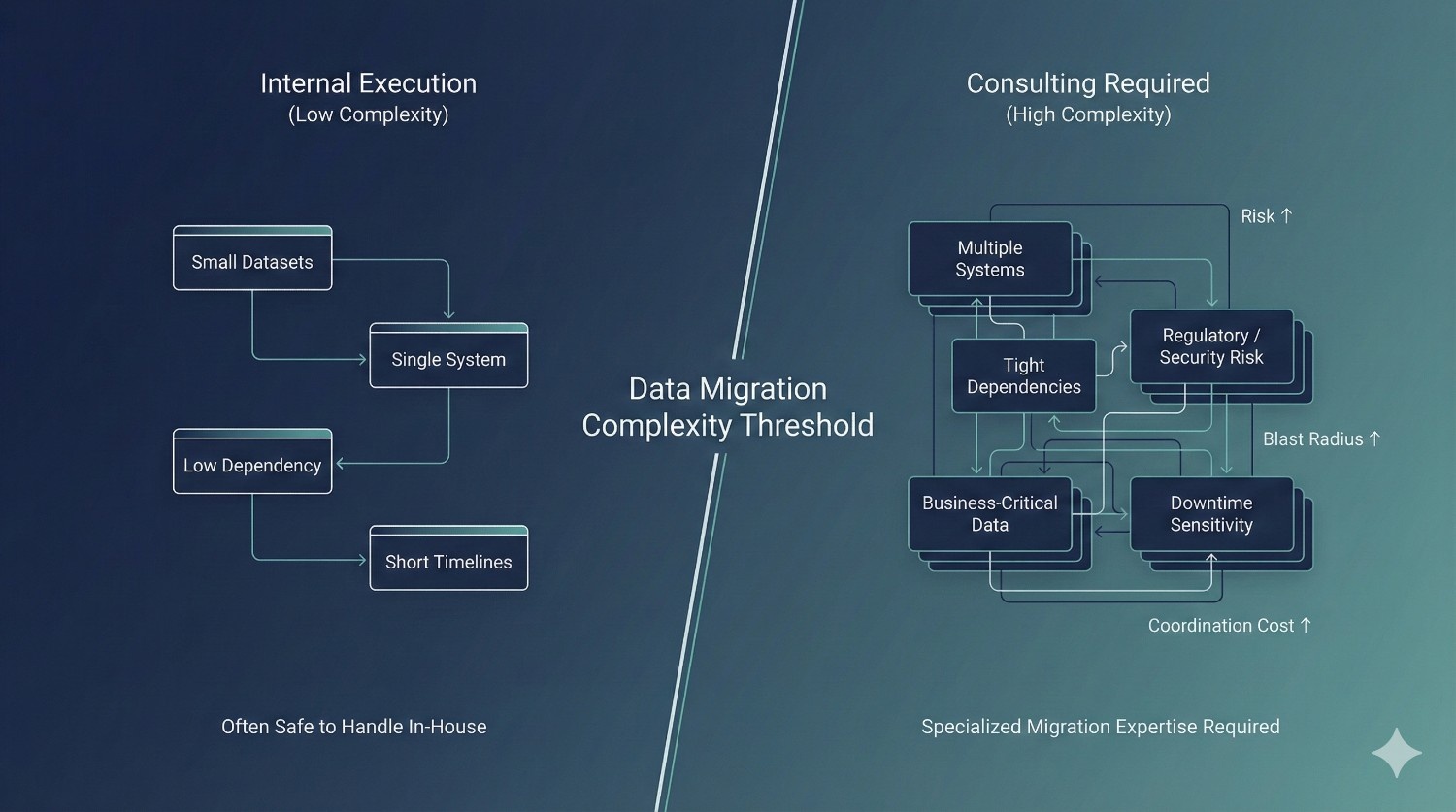
Data migration is the process of moving data from one storage system, format, or location to another. In today’s dynamic technology landscape, it’s an increasingly common, yet often complex, necessity for businesses undergoing digital transformation, system upgrades, or cloud adoption. While small, straightforward data transfers can often be handled internally, larger, more complex, or mission-critical projects often benefit immensely from the expertise of specialized data migration consultants.
This guide explores the key indicators and scenarios that signal a clear need to bring in data migration consulting experts, ensuring your transition is seamless, secure, and successful.
Understanding the Landscape: Data Migration Challenges
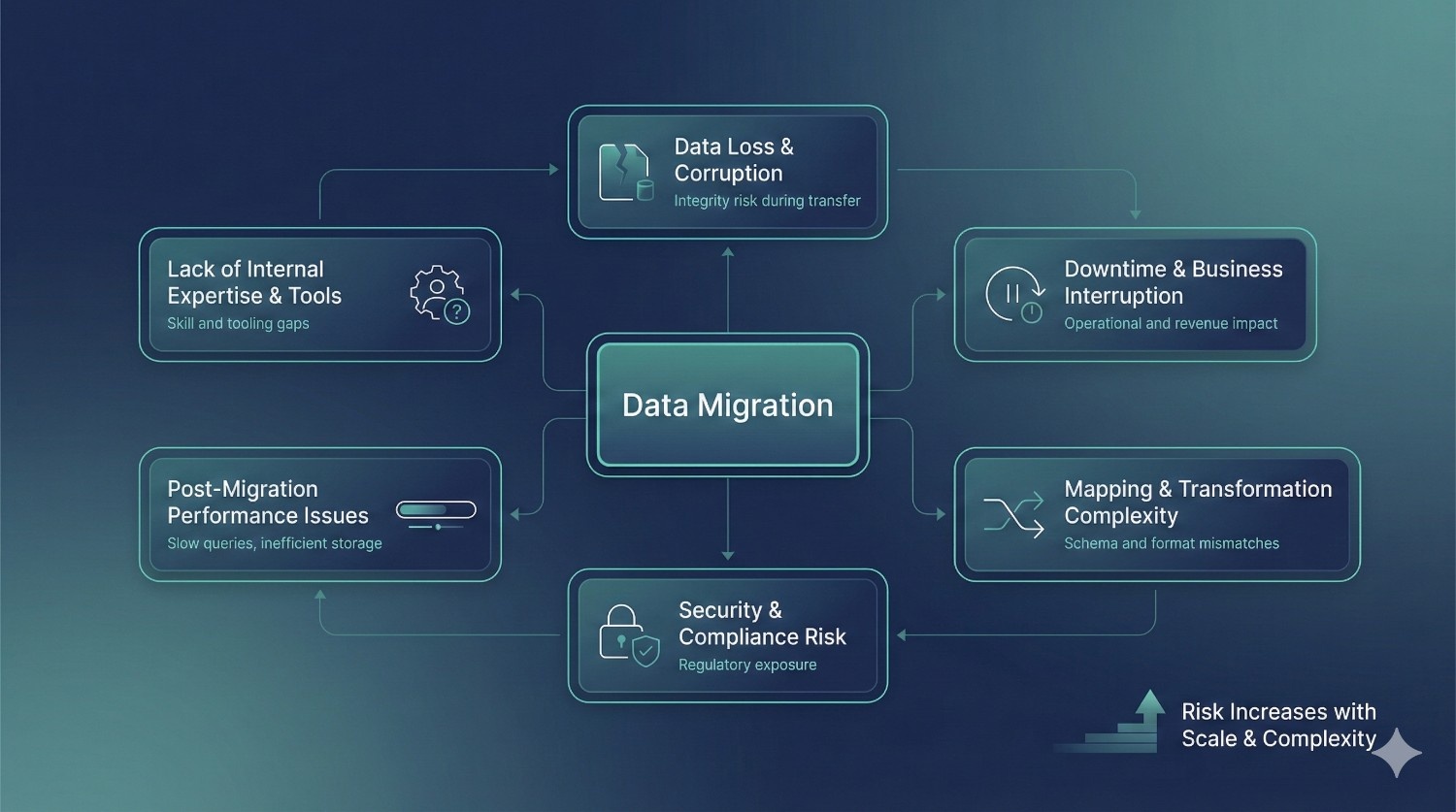
Before diving into the “when,” it’s crucial to understand the inherent challenges that turn a seemingly simple move into a potential business risk:
- Data Loss and Corruption: The main risk is the loss or corruption of valuable data during transit or transformation.
- Downtime and Business Interruption: Migration often requires systems to be partially or fully offline, impacting operations and revenue. Minimizing downtime is critical.
- Data Mapping and Transformation Complexity: Moving data between different schemas or formats requires meticulous planning and execution of transformations.
- Security and Compliance: Ensuring data remains secure and compliant with regulations (e.g., GDPR, HIPAA) throughout the entire process is non-negotiable.
- Performance Issues Post-Migration: The new system might not perform as expected due to incorrectly migrated or poorly optimized data.
- Lack of Internal Expertise and Tools: Many organizations lack the specialized skill set or the necessary enterprise-grade tools for large-scale, complex migrations.
When these challenges are compounded by scale or complexity, the risk of internal failure significantly outweighs the cost of expert consultation.
Key Scenarios That Demand Expert Data Migration Consulting
The decision to hire a consultant usually arises when internal capabilities are strained, the project risk is high, or the migration itself is non-standard.
Scenario | Risk Level | Consultant / Internal | Why |
|---|---|---|---|
First cloud migration ever |
High |
Consultant |
No internal playbook exists |
Data volume over 1TB |
High |
Consultant |
Requires parallel processing tools |
Compliance data (HIPAA/GDPR/SOX) |
Critical |
Consultant |
Needs specialist cutover techniques |
Small isolated migration under 500GB |
Low |
Internal |
Limited blast radius if something fails |
Few downstream consumers |
Low |
Internal |
Easy to validate and roll back |
Multiple teams consuming same data |
High |
Consultant |
Ownership gaps cause silent failures |
If failure has business-level consequences, bring in a consultant. If the blast radius is small and controlled, internal teams can handle it.
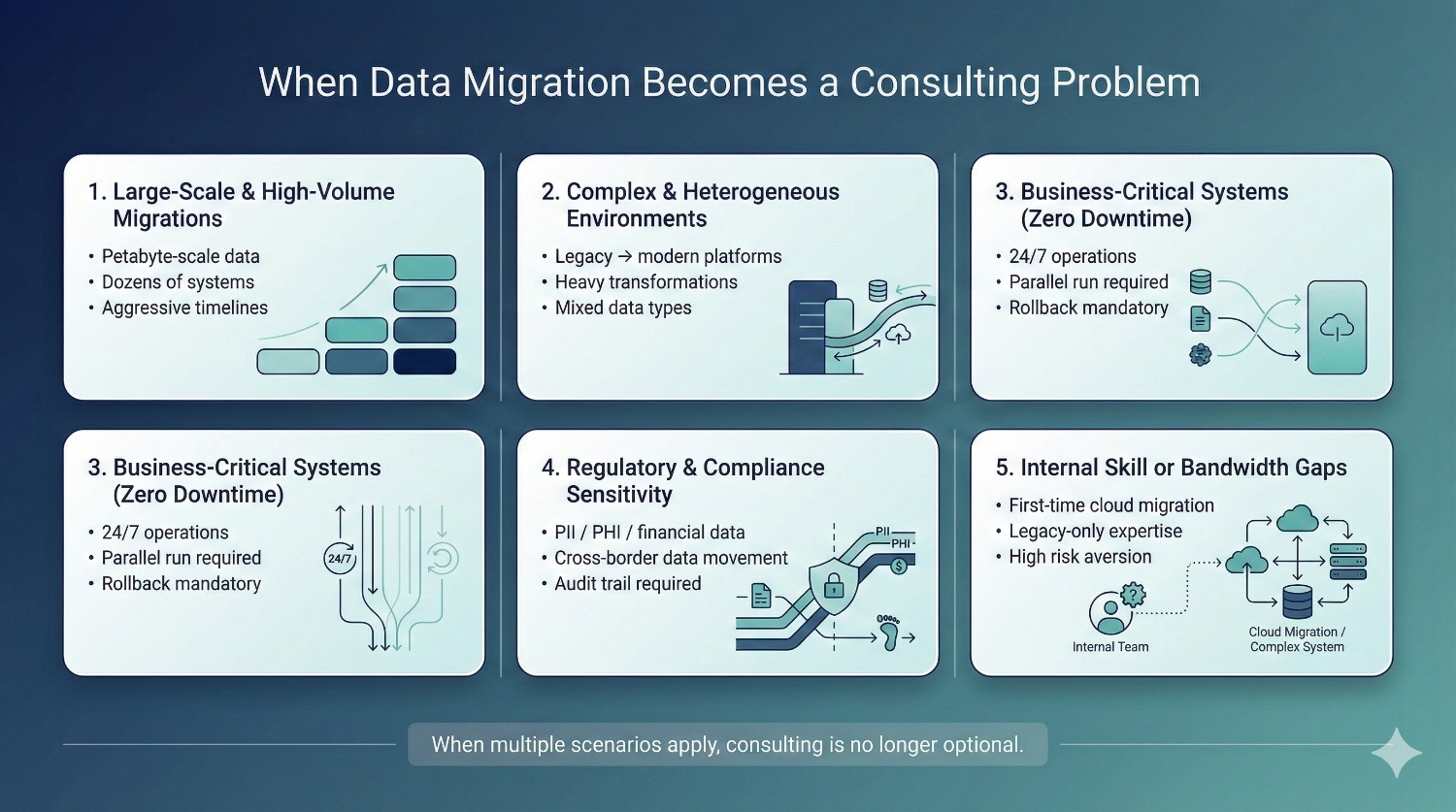
1. Large-Scale and High-Volume Migrations
When the sheer volume of data is measured in terabytes or petabytes, or when the number of affected systems runs into the dozens, the project quickly exceeds standard internal capacity.
Indicators:
- Massive Data Volume: Moving petabytes of data, especially across network boundaries (e.g., from an on-premise data center to a public cloud).
- Hundreds of Applications/Databases: Coordinating the migration of data across a vast ecosystem of interconnected enterprise applications (ERP, CRM, custom systems).
- Short Timeframes: The business mandates a very aggressive timeline that requires specialized automation, tooling, and 24/7 project management expertise to meet.
Consultants bring specialized, parallel processing tools and methodologies optimized for scale, ensuring rapid and safe transfer.
2. Complex System Integration and Heterogeneous Environments
Moving data from a single, homogeneous source to a single, identical target is straightforward. Real-world scenarios are rarely this simple.
Indicators:
- Source-to-Target Mismatch: Migrating data from an older, highly customized legacy system (e.g., a mainframe) to a modern, standardized cloud platform (e.g., Salesforce, SAP S/4HANA).
- Data Transformation Needs: The target system requires significant data restructuring, cleansing, and normalization that goes beyond simple field mapping.
- Migration of Multiple Data Types: Dealing with structured databases, unstructured documents, video files, and historical archives simultaneously.
Consultants excel at architecting the Extract, Transform, and Load (ETL) pipeline, particularly the ‘Transform’ step, ensuring data integrity and usability in the new environment.
3. Business-Critical System Upgrades (Zero Downtime Required)
If the system being migrated supports mission-critical functions (like real-time financial transactions, customer service, or production lines), any downtime is unacceptable.
Indicators:
- 24/7/365 Operations: The business cannot afford more than a few minutes of outage (e.g., financial services, e-commerce platforms, healthcare systems).
- Need for Phased Rollout/Parallel Operations: The requirement is to run the old and new systems simultaneously during the transition (a “zero-downtime” or “blue/green” strategy).
- Reverse Migration Planning: The need for a detailed and tested rollback plan in case the new system fails validation.
Consultants specializing in near-zero-downtime strategies employ sophisticated techniques like continuous replication, delta capture, and live cutovers, meticulously planning the transition to minimize business impact.
4. Regulatory and Compliance Sensitivity
When data is governed by strict regulations, the migration process itself must adhere to stringent compliance protocols to avoid massive fines and legal repercussions.
Indicators:
- Handling Sensitive Data: Migrating Protected Health Information (PHI), Personally Identifiable Information (PII), or financial records.
- Jurisdictional Complexity: Moving data across national borders, requiring adherence to multiple, conflicting data residency and sovereignty laws (e.g., moving EU data to a US-based cloud).
- Mandatory Auditing and Documentation: The regulatory body requires verifiable proof and a detailed audit trail of every data movement and transformation.
Data migration consultants bring not just technical skill, but also a deep understanding of compliance frameworks, ensuring every step of the process is documented, secured, and legally sound.
5. Lack of Internal Skills, Experience, or Bandwidth
Sometimes, the need for external help is purely practical: the internal IT team is already stretched thin, or they simply lack prior experience with a specific type of migration.
Indicators:
- First-Time Cloud Migration: The company has never migrated a core system to a public cloud provider (AWS, Azure, GCP).
- Outdated Internal Expertise: The existing team has experience with legacy systems but is unfamiliar with modern technologies, APIs, or cloud migration tools.
- High Risk Aversion: The leadership team views the migration as too critical and high-risk to entrust to a team gaining experience on the fly.
Consultants provide instant access to seasoned professionals who have successfully executed similar projects many times before, dramatically reducing the learning curve and mitigating risk.
The Cloud Migration Imperative
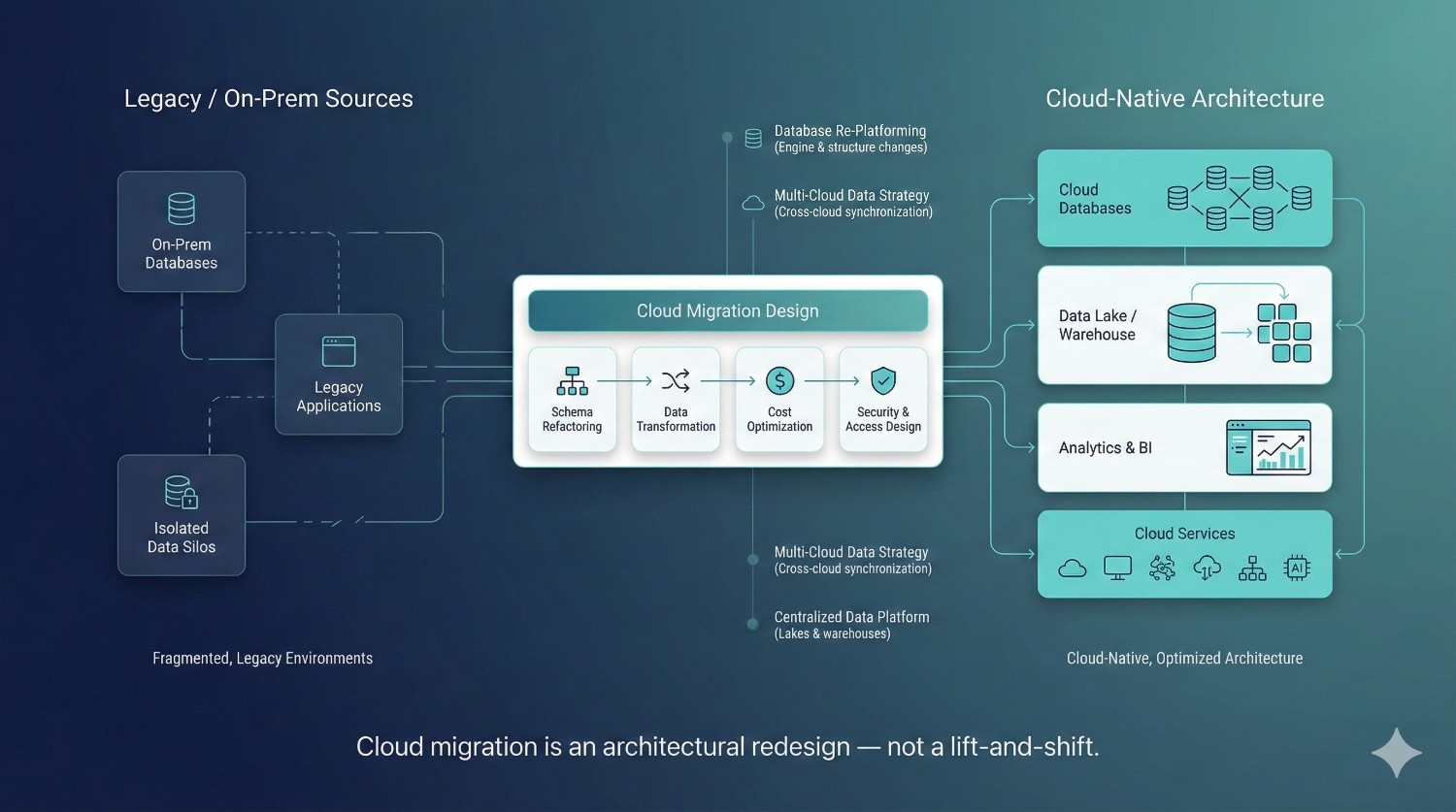
Cloud adoption is perhaps the most common trigger for seeking data migration consulting today. Moving to the cloud is less about “lifting and shifting” and more about restructuring data for cloud-native performance and cost efficiency.
Specific Cloud Migration Scenarios Requiring Consulting
- Database Refactoring (Re-platforming/Re-architecting): Not just moving a database, but changing its underlying engine (e.g., Oracle to PostgreSQL) or structure to optimize for a cloud-native service.
- Multi-Cloud Strategy: Migrating data that will be split or shared across two or more different cloud providers, requiring complex networking and synchronization strategies.
- Data Lake/Data Warehouse Buildout: Building a new centralized data repository in the cloud often requires migrating and harmonizing data from dozens of disparate on-premise sources.
Consultants help design the target cloud architecture before the migration, ensuring the data lands correctly and leverages the full suite of cloud services.
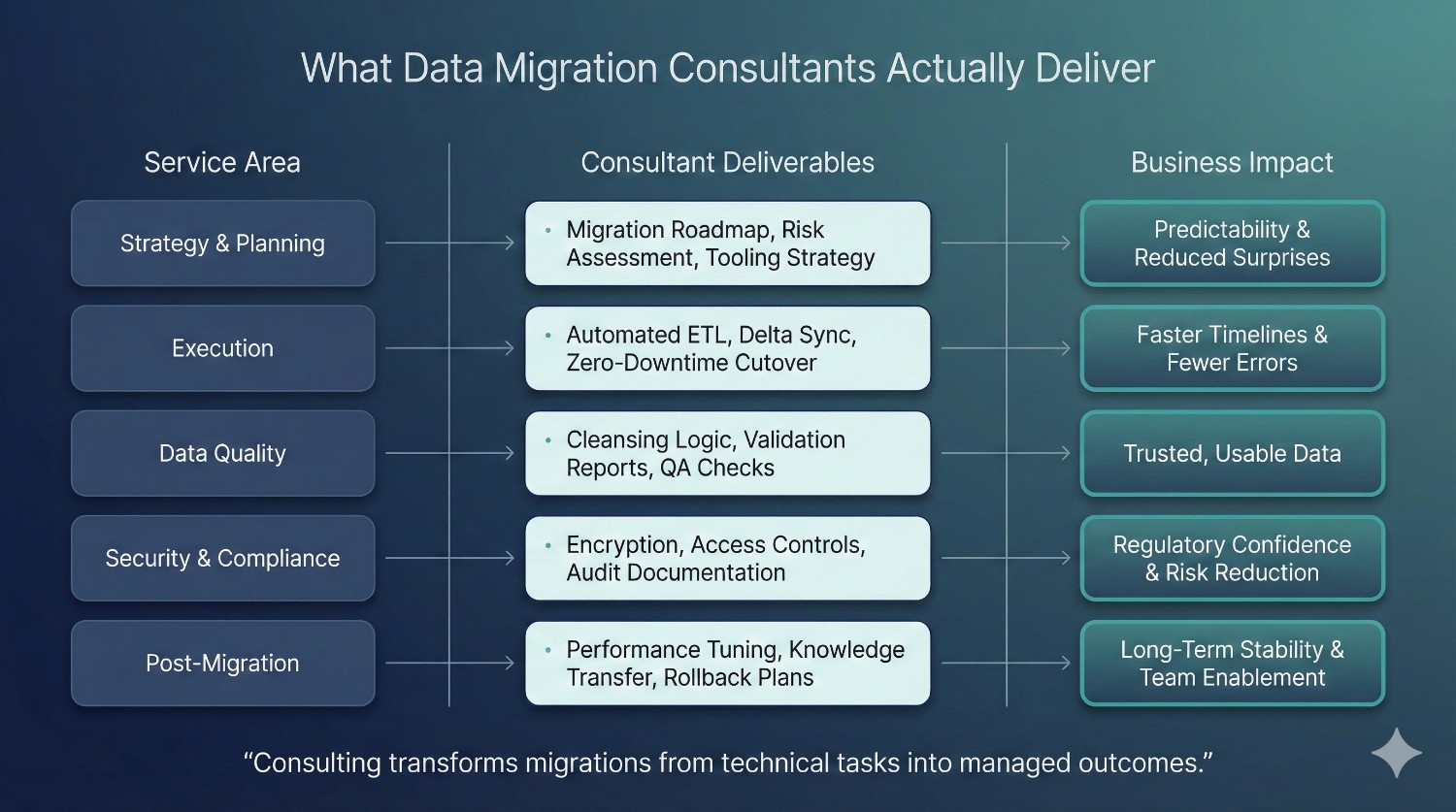
The Consultant's Value Proposition: Beyond Just Moving Data
Hiring a data migration consultant isn’t just about renting technical hands; it’s about acquiring a strategic partner who offers a comprehensive methodology.
Service Area | Consultant Deliverable | Impact on Project |
|---|---|---|
Strategy & Planning |
Detailed Migration Roadmap, Risk Assessment, Tool Selection |
Reduces unexpected issues, defines clear success metrics. |
Execution |
Automated ETL Pipelines, Delta Capture/Sync, Zero-Downtime Cutover |
Minimizes manual errors, accelerates transfer time, ensures continuity. |
Data Quality |
Data Cleansing Scripts, Validation Reports, Quality Assurance Checks |
Ensures data is clean, consistent, and usable in the new system. |
Security & Compliance |
Encryption Protocols, Access Controls, Audit Trail Documentation |
Guarantees regulatory adherence and protects sensitive information |
Post-Migration |
Performance Tuning, Knowledge Transfer, Rollback Plan |
Optimizes new system performance, empowers internal team for future maintenance. |
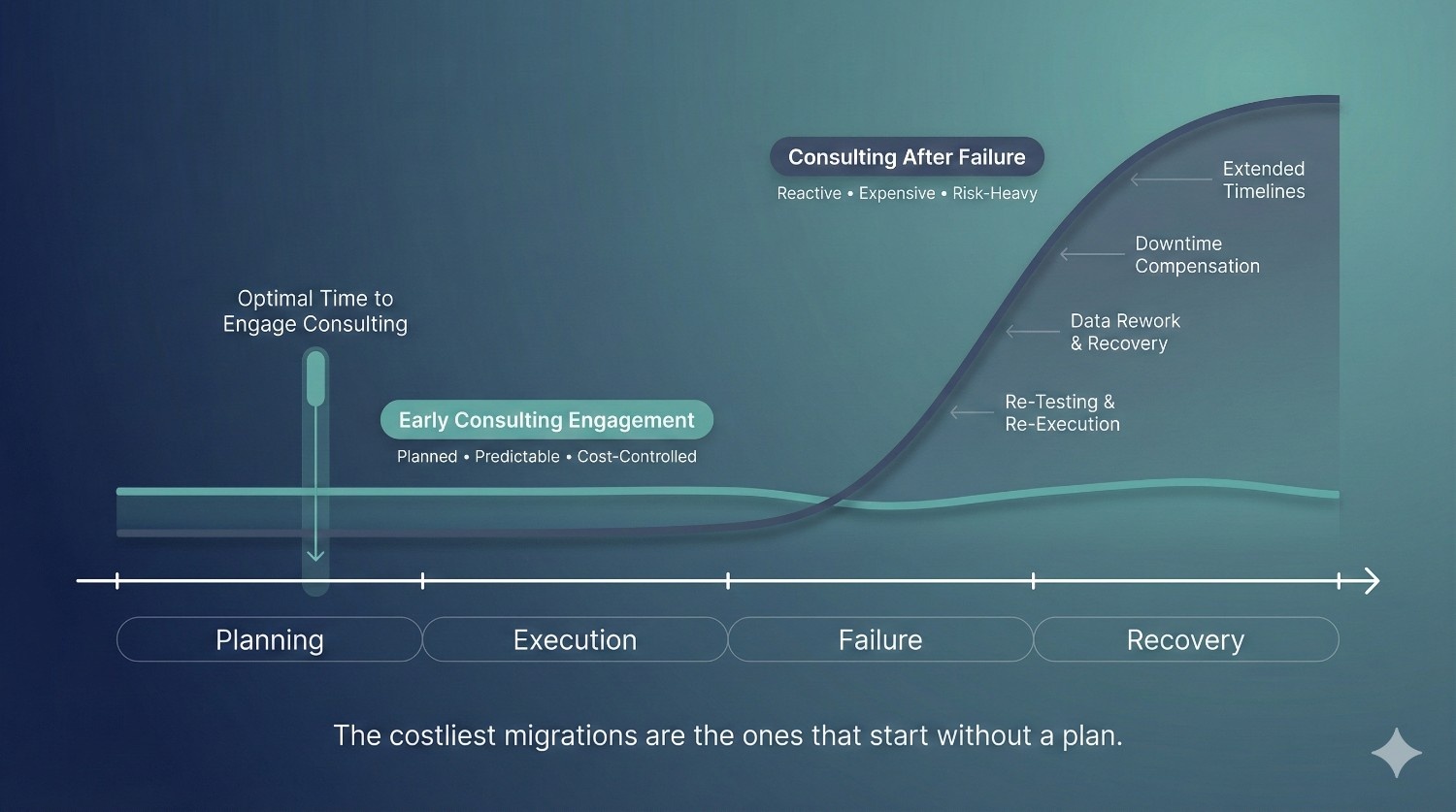
Why Delaying Consultation is a Costly Mistake
Many companies attempt the migration internally, only calling in consultants after encountering significant, costly problems. This reactive approach often leads to:
- Extended Timelines: Internal teams waste time troubleshooting issues that consultants solve quickly, leading to missed deadlines.
- Increased Data Risk: Failed attempts increase the likelihood of data corruption or loss, potentially requiring costly data recovery efforts.
- Higher Overall Cost: The expense of fixing a failed migration (re-testing, re-executing, compensating for downtime) is often significantly higher than the cost of strategic planning from the outset.
The best time to engage a data migration consultant is during the discovery and planning phase, well before the first data packet is moved. They can help select the right tools, define the necessary transformations, and design the optimal architecture, saving time and money down the line.
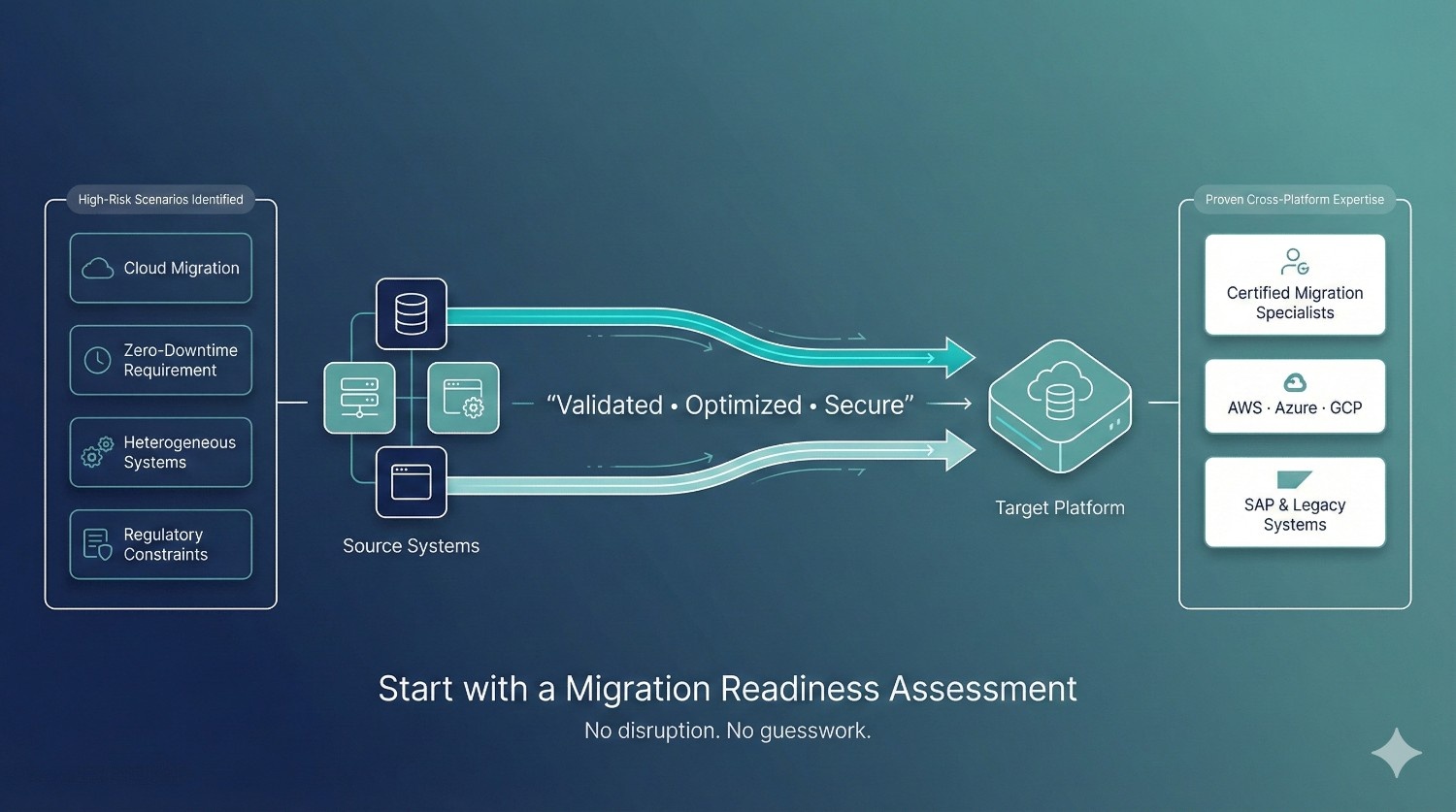
Ready to Ensure Your Data Migration Success?
If your organization is facing any of the high-risk scenarios detailed above—whether it’s a massive cloud shift, a zero-downtime mandate, or a highly complex heterogeneous environment—the time for strategic consultation is now.
At Data Prism, we have a dedicated team of certified data migration specialists. They possess deep expertise across all major platforms, including AWS, Azure, GCP, SAP, and legacy systems. We don’t just move your data; we validate, optimize, and secure it, providing a seamless transition that minimizes business interruption and maximizes the value of your new infrastructure. Contact us today for a complimentary migration readiness assessment and take the first step toward a flawless data transition.
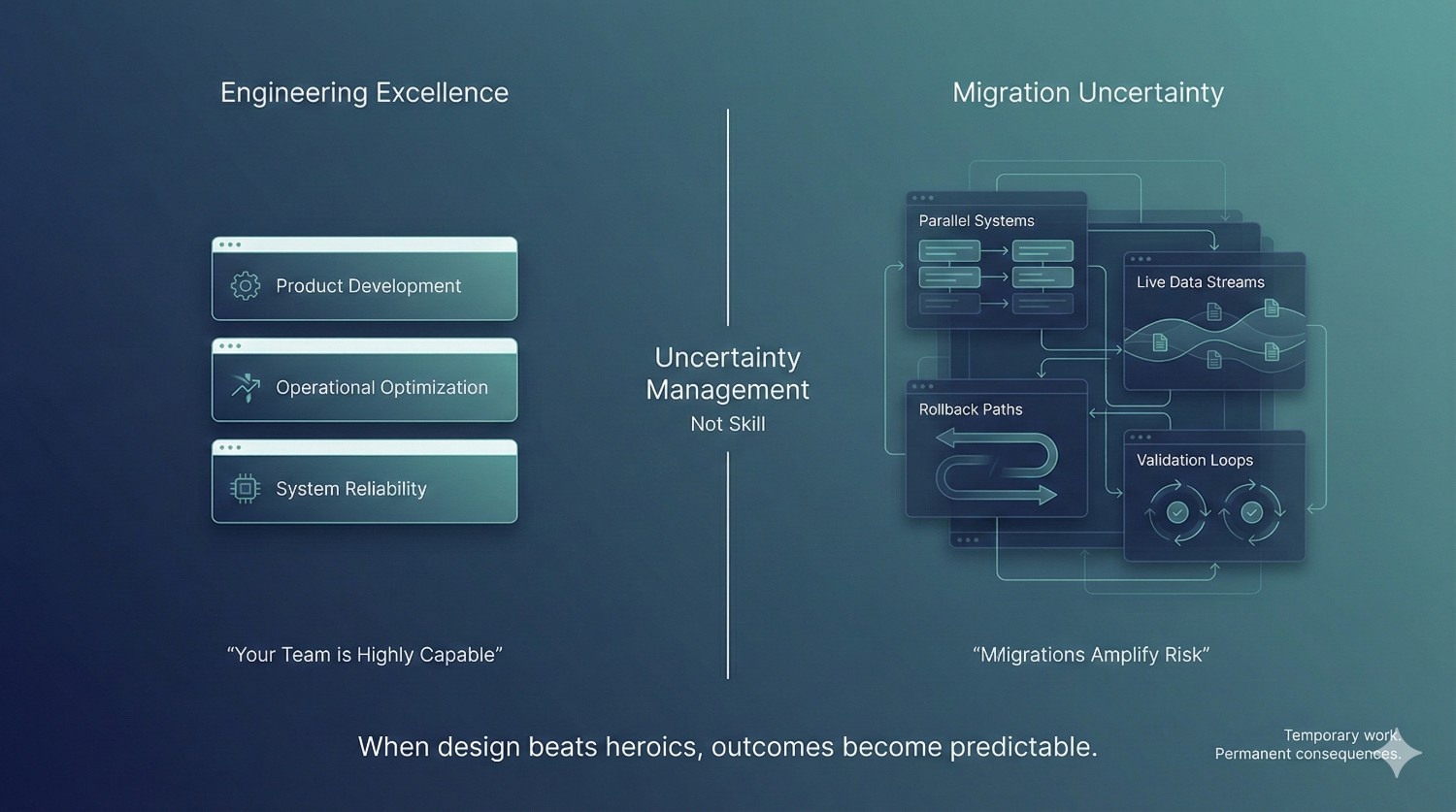
Conclusion
A data migration is not a simple technical task; it is a high-stakes, cross-functional engineering program.
It is critical to reinforce that the decision to hire consultants is not about questioning your team’s skill set. Your engineers are brilliant at building products and optimizing operations. The decision is about uncertainty management.
Data migrations are temporary, high-impact events that require a unique set of engineering disciplines: forensic analysis, parallel run orchestration, and rollback mastery. When design beats heroics, success is guaranteed.
The ultimate question isn’t whether your team can migrate data—it’s whether your business can afford the consequences if something, somewhere, goes wrong.
Frequently Asked Questions (FAQ)
Data migration consulting is a specialized service focused on planning, designing, and executing data migrations with minimal risk. It goes beyond copying data by addressing architecture design, data validation, performance tuning, governance, and rollback planning to ensure accuracy, continuity, and long-term reliability.
Data migration consulting becomes necessary when data is business-critical, multiple systems are involved, compliance requirements exist, or downtime and errors carry significant financial or operational risk. The need is driven by complexity and impact, not by company size.
Yes, internal teams can handle small, well-defined migrations with low risk and limited downstream dependencies. However, even highly skilled teams often struggle with large or complex migrations due to competing priorities, lack of migration playbooks, and insufficient time for validation and rollback planning.
Common risks include data loss, inconsistent metrics, broken dashboards, governance gaps, unexpected downtime, and long-term performance or cost issues. Many of these problems surface weeks or months after the migration, making them difficult and expensive to fix.
Consultants reduce risk by introducing structured migration frameworks, parallel environments, automated data reconciliation, clear cutover plans, and rollback strategies. This approach ensures issues are detected early and migrations are proven safe before becoming production-critical.
No. Smaller organizations often need consulting more urgently when they lack redundancy, documentation, or tolerance for failure. The deciding factor is not organization size, but whether the business can absorb the impact of migration errors or downtime.
Timelines vary based on data volume, system complexity, and governance requirements. While consulting-led migrations may appear slower initially due to upfront planning, they often complete faster overall by avoiding rework, firefighting, and post-migration fixes.
While consulting introduces an upfront cost, it frequently reduces total migration cost by preventing failed cutovers, re-engineering efforts, prolonged downtime, and uncontrolled cloud compute expenses after migration.
Organizations should prepare basic system inventories, identify key stakeholders, document known risks, and clarify business timelines. Consultants typically help uncover gaps, undocumented dependencies, and hidden risks during the initial assessment phase.
A migration is high-risk if it involves revenue-impacting data, multiple consuming teams, legacy systems, strict compliance requirements, or limited rollback options. If failure would delay roadmaps or erode trust, the migration should be treated as a high-risk initiative.