What is Data Lake Testing? Complete Strategy and Checklist

Usman AshrafOct 31, 2025
Data Pipeline Processing To Lake

Introduction

Every enterprise today handles massive volumes of data, ranging from transactional databases and application event logs to real-time IoT sensor streams and social media feeds. However, if this information is not continuously validated, it can quickly degrade into a messy, unmanageable "data swamp."

When teams neglect programmatic testing, pipelines inevitably encounter missing files, silent schema drift, duplicate rows, and corrupted partitions. These pipeline failures feed directly into broken dashboards, leading to unreliable reporting and poor business decisions.

Implementing a robust data lake validation framework is no longer a luxury; it is a fundamental requirement for maintaining clean, authoritative, and actionable data assets.

What is Data Lake Testing

Data Lake Testing is the systematic process of validating data cleanliness, structural integrity, schema compliance, and processing logic as data flows from raw operational sources into a centralized repository.

Unlike traditional Relational Database Management Systems (RDBMS) that enforce a strict Schema-on-Write model, data lakes adopt a flexible Schema-on-Read methodology. Because a data lake accepts unstructured, semi-structured, and structured files at varying speeds, automated testing acts as the primary defense mechanism against structural decay and pipeline corruption.

The Core Pillars of Lakehouse Quality Assurance

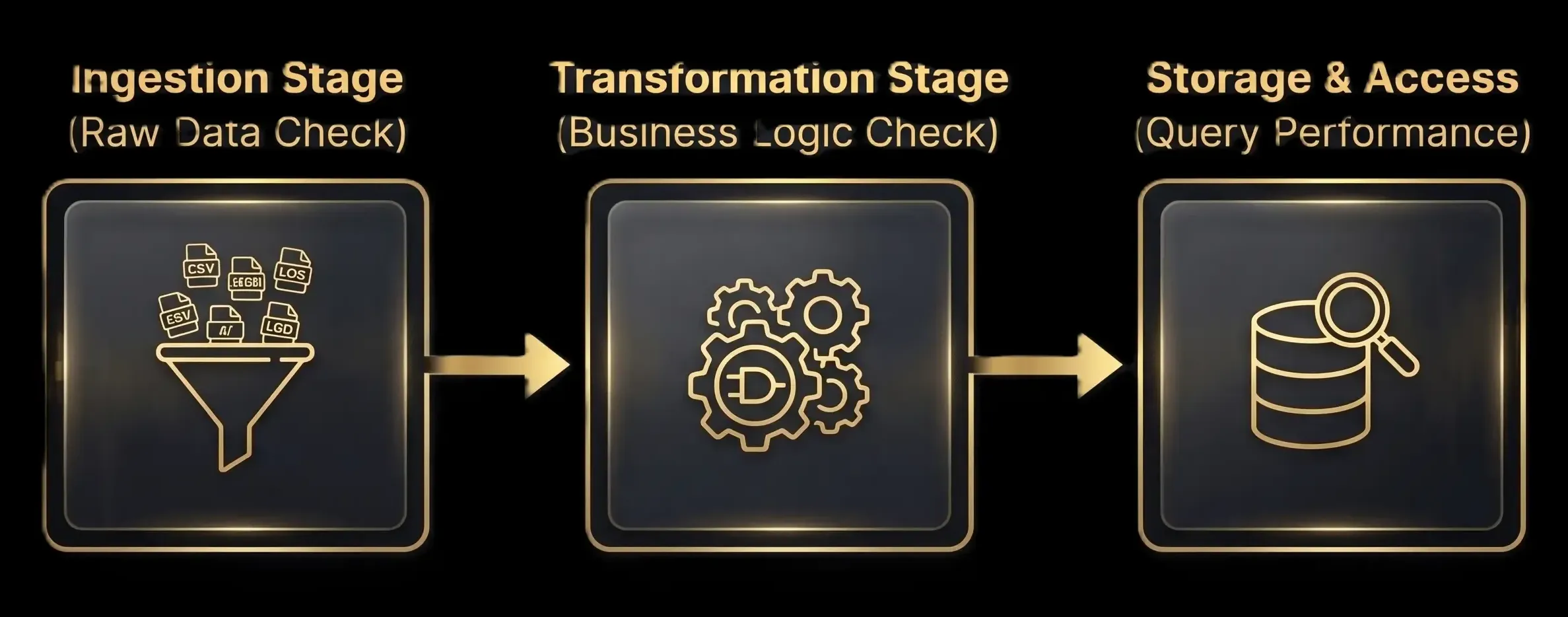
A comprehensive data lake testing strategy requires verifying data stability at every major stage of the ingestion and processing pipeline.
lakehouse_qa_core_pillars_process

1. Data Ingestion Testing

This initial gate ensures that source data from APIs, message queues (like Kafka), or database replication logs lands in the ingestion zone intact. Tests at this stage focus on:

  • File Completeness: Matching landing file byte sizes and row counts against source metadata.
  • Format Validation: Ensuring semi-structured formats like JSON, Avro, or Parquet parse correctly without unhandled exceptions.


2. Data Transformation Testing

As data moves through cleansing, enrichment, and aggregation phases, transformation testing validates that your processing logic behaves exactly as expected. This involves:

  • Business Rules Enforcement: Confirming calculations, lookups, and conditional logic yield correct outputs.
  • Schema Drift Verification: Detecting when an upstream source alters a data type, adds an unexpected column, or drops a crucial field.


3. Data Storage and Retrieval Testing

This pillar evaluates how files are physically partitioned, cataloged, and read within the storage layer (such as AWS S3, Azure ADLS, or Google Cloud Storage). Testing ensures that partition structures match temporal or categorical design requirements, allowing analytical engines to query data efficiently.


4. Performance and Security Testing

Data lakes often hold sensitive corporate records and serve multiple downstream consumers simultaneously.

  • Performance Testing: Evaluates read/write latency under high concurrent user loads.
  • Security Testing: Verifies row-level and column-level access control frameworks, confirming that sensitive data is appropriately masked or restricted.

Essential Tools for Testing Data Pipelines

Building a resilient data lake requires a specialized stack of validation, orchestration, and monitoring tools.

Tool

Primary Testing Function

Ideal Deployment Use Case

Great Expectations

Declarative Data Quality & Assertions

Automated schema validation and out-of-bounds metrics alerts

Apache NiFi

Ingestion & Flow Management

Visual monitoring and lineage tracking of incoming streaming data

Apache JMeter

Performance & Scalability Load Testing

Simulating high concurrent query volumes against analytical layers

Talend Data Quality

Profiling & Format Standardization

Eliminating duplicate fields and normalizing dirty source data

Apache Ranger

Access Control & Security Auditing

Enforcing centralized data governance and fine-grained masking policies

Data Validation Strategies Across the Medallion Architecture

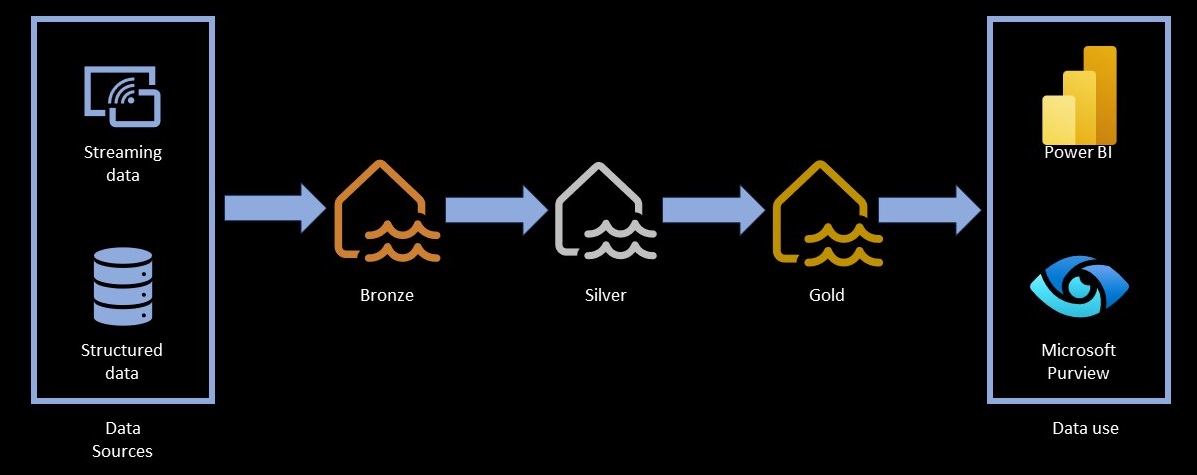
Modern data platforms manage data quality using a multi-layered storage pattern known as the Medallion Architecture. Your testing strategy should adapt to the specific objectives of each layer.
Typical-medallion-architecture-4
https://www.kevinrchant.com/2024/05/03/the-great-number-of-workspaces-for-medallion-architecture-in-microsoft-fabric-debate/


Automated Processing Validation

Automated monitoring frameworks like Great Expectations, Soda Core, or AWS Deequ are best deployed at the transition boundaries between layers. As soon as data lands in the Bronze (Raw) Zone, automated assertions run to check for basic structure, null percentages, and volume variance before promoting the files to the next layer.


Structural Verification

The Silver (Enforced) Zone transforms raw files into clean tables. Testing here relies on programmatic tools like DBeaver or SQL Workbench combined with automated test runs to verify that typecasting, schema enforcement, data deduplication, and referential integrity checks have executed perfectly.


CI/CD Pipeline Integration

To prevent buggy transformation code from breaking production environments, integrate data quality tests directly into your deployment pipelines using tools like Jenkins, GitLab CI, or GitHub Actions. Every change to an ETL/ELT script should trigger automated unit tests against a sandboxed staging data lake before being released to production.

Data Lake Testing Strategy Case study

A strong data testing strategy works hand-in-hand with data lake consulting services to ensure that every stage from data ingestion to analytics runs flawlessly. These engineering services help design, build, and manage the lake architecture, while the testing strategy verifies that data remains accurate, consistent, and secure.


Scenario Background

An online retailer ingests millions of global website events, clickstream logs, and transactional records daily into a cloud-based data lake. The data feeds downstream machine learning models and executive sales dashboards.


Implementation Strategy

The team established a multi-layered pipeline testing protocol supported by dedicated data lake consulting services to ensure structural integrity across three critical execution vector areas:


[Source Systems]


[Bronze Zone]

(Test Case: File format matches expected Apache Parquet compression.)


[Silver Zone]

(Test Case: Standardizes timestamps, drops duplicate event IDs.)


[Gold Zone]

(Test Case: Confirms calculated conversion rates fall between 0% and 100%.)

By introducing standardized test cases at each tier, the company successfully reduced pipeline processing downtime by over 40% within the first quarter of deployment.

The Complete Data Lake Testing Checklist

Use this actionable engineering checklist to verify your data lake pipelines maintain exceptional data quality at every stage:

Phase 1: Ingestion & Schema Gate

  • Row Count Reconciliation: Total records ingested from the source match the file row totals in the Bronze storage layer.
  • File Corruption Scan: Input files parse completely without throwing EOF (End of File) or formatting errors.
  • Schema Drift Detection: Column counts, field names, and structural data types match the defined baseline schema.
  • Null-Value Threshold Evaluation: Critical primary keys or operational identifiers contain zero null records.


Phase 2: Processing & Transformation Gate

  • Typecasting Verification: String-based source timestamps convert accurately into standard UTC timestamp data types.
  • Deduplication Validation: Records with identical unique business keys are successfully deduplicated during Silver zone processing.
  • Business Logic Check: Aggregated metrics, tax formulas, and currency conversions yield exact mathematical matches against control samples.
  • Orphaned Records Audit: Join operations do not create unintended orphan records or accidental Cartesian products.


Phase 3: Storage, Performance, and Security Gate

  • Partition Structure Check: Files sit within correct directory partitions (e.g., /year=2026/month=06/).
  • Access Isolation Control: Unauthorized user credentials are blocked from viewing restricted folders or columns containing PII (Personally Identifiable Information).
  • Query Performance SLA Evaluation: Complex analytical queries execute within standard performance SLAs under peak database loads.

Common Technical Challenges & Mitigation
Data Lake Testing Venn Diagram

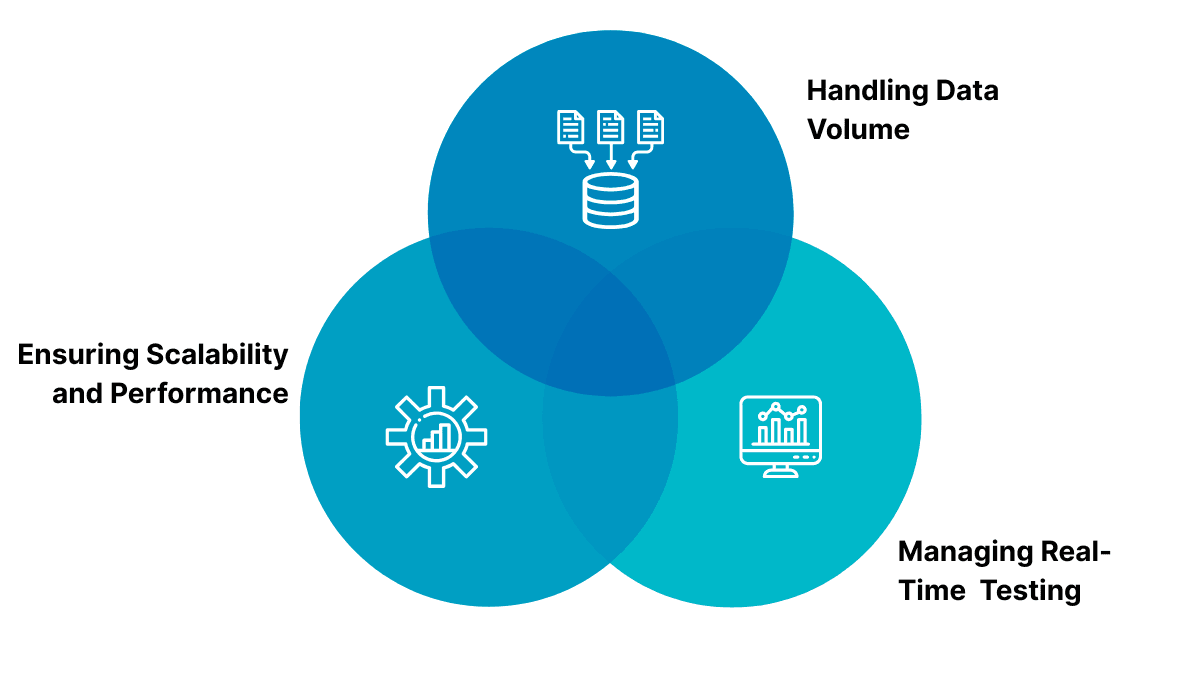
As data lakes expand to petabyte scale, data teams face a unique set of technical hurdles:

  • Managing Massive Data Volumes: Scanning every single row across billions of records is computationally expensive and slow.
    • Mitigation: Implement statistical data sampling and focus full validation checks on critical business keys, tracking trends via lightweight anomaly detection algorithms.
  • Validating Real-Time Data Streams: Streaming architectures process data continuously, making traditional batch testing obsolete.
    • Mitigation: Deploy continuous monitoring windows (sliding time windows) to validate data volumes and latency directly within your streaming engine before writing to disk.
  • Scalability Bottlenecks: Complex data quality checks can slow down ingestion, causing upstream data queues to back up.
    • Mitigation: Offload compute-heavy assertions to distributed query engines like Apache Spark or Snowflake, allowing validation steps to scale alongside your data footprint.

Best Practices for Long-Term Data Lake Health

To maintain high data quality as your platform evolves over time, incorporate these core practices into your daily engineering workflows:

  1. Standardize Your Testing Framework: Avoid using fragmented, ad-hoc validation scripts across different teams. Standardize on a single, unified framework to ensure all test designs and data quality reports are consistent and repeatable.
  2. Prioritize Automated Cloud Tooling: Manual testing cannot scale alongside modern data lakes. Automate your testing workloads within your orchestration layers, allowing validation scripts to run 24/7 without manual intervention.
  3. Establish Continuous Monitoring and Alerts: Treat your data lake as a living product. Set up automated alerting thresholds to notify on-call engineers via Slack, PagerDuty, or email the moment a data quality rule fails, allowing you to isolate and fix pipeline errors before they impact downstream business dashboards.

Conclusion: Securing Trust in Your Data Architecture

Preventing a data lake from degrading into an unusable data swamp requires a proactive, structured validation framework embedded directly within your pipelines. Validating data at every critical intersection—from raw bronze ingestion to gold-tier aggregation—ensures that downstream analytics, machine learning models, and business intelligence dashboards are built on a foundation of absolute structural trust.

By adopting automated quality tools, standardizing your engineering checklists, and continuously monitoring processing workflows for silent schema drift, your data team can successfully transform an unpredictable data repository into a highly stable, scalable enterprise asset.

Key Operational Takeaways

Validate at the Gate: Do not wait until data reaches downstream analytics layers to check for errors; catch anomalies immediately as soon as raw files land in your ingestion zone.

Automate to Scale: Manual schema sampling cannot keep pace with modern scale. Embed automated validation engines directly into your CI/CD pipelines to monitor data health 24/7.

Shield Against Drift: Deploy active schema enforcement mechanisms to protect production models from unannounced upstream database alterations.


Book a Free 30-Minute Meeting

Discover how our services can support your goals — no strings attached. Schedule your free 30-minute consultation today and let's explore the possibilities.

Book a Free Call

Frequently Asked Questions

Automation tools like Apache Airflow, Great Expectations, and PySpark make Data Lake Testing faster and more reliable. They help detect data issues early, reduce manual work, and ensure consistent validation across large and complex data pipelines.

Without proper testing, a data lake can quickly turn into a "data swamp"—a chaotic repository of raw, inaccurate, or duplicate data. Testing ensures that the data flowing into your system remains clean, trustworthy, and secure, which is absolutely critical for generating accurate analytics and making reliable business decisions.

The main steps include data ingestion testing, data transformation validation, storage and retrieval testing, and performance or security checks.

Because data lakes require multiple stages of testing, teams usually rely on a combination of tools. For example, Apache NiFi is excellent for managing and testing data ingestion, Great Expectations and Talend are industry standards for automated data validation and quality checks, Apache JMeter is used for performance and load testing, and Apache Ranger manages security and access control.

The most common challenges include managing massive data volumes across varying formats (structured, semi-structured, and unstructured), validating continuous, real-time data streams without missing records, and maintaining query performance and system scalability as the size of the data lake expands.

Book Consultation